
TECHNOLOGY
MOTORISED URBAN OPERATIONS NOW POSSIBLE WITH NEW LIVE FIRING FACILITY
14 Aug 2014
Singapore Armed Forces (SAF) soldiers can now have more realistic live firing training in an urban operations environment, with the launch of the Murai Urban Live Firing Facility (MULFAC).
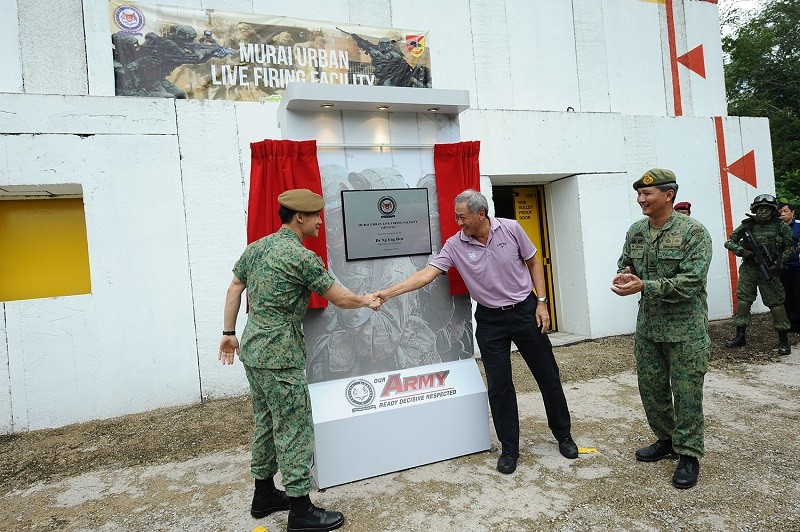
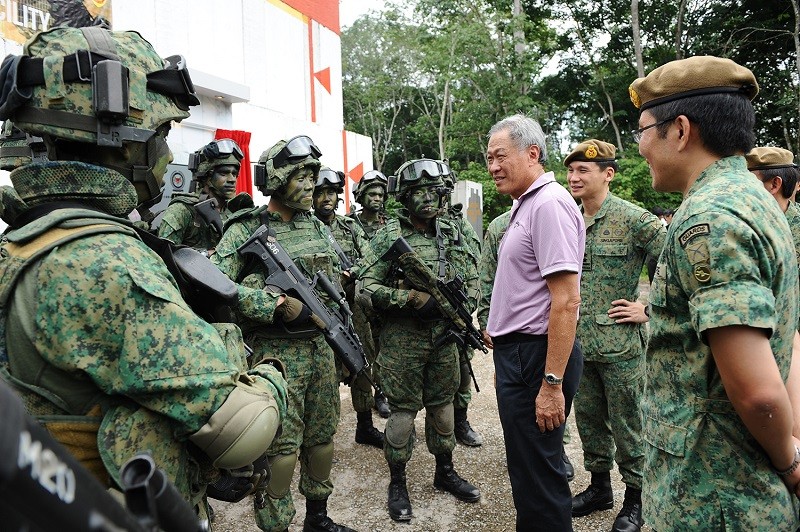
Singapore Armed Forces (SAF) soldiers can now have more realistic live firing training in an urban operations environment, with the launch of the Murai Urban Live Firing Facility (MULFAC).
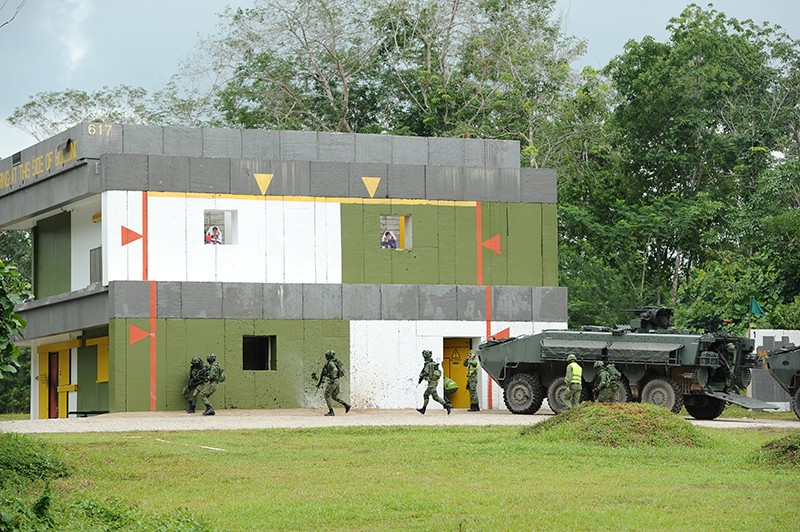
Located at the Lim Chu Kang Live Firing Area, MULFAC is designed for live firing up to company level (about 100 men) and allows the SAF to execute a full urban operations mission for both light and motorised units.
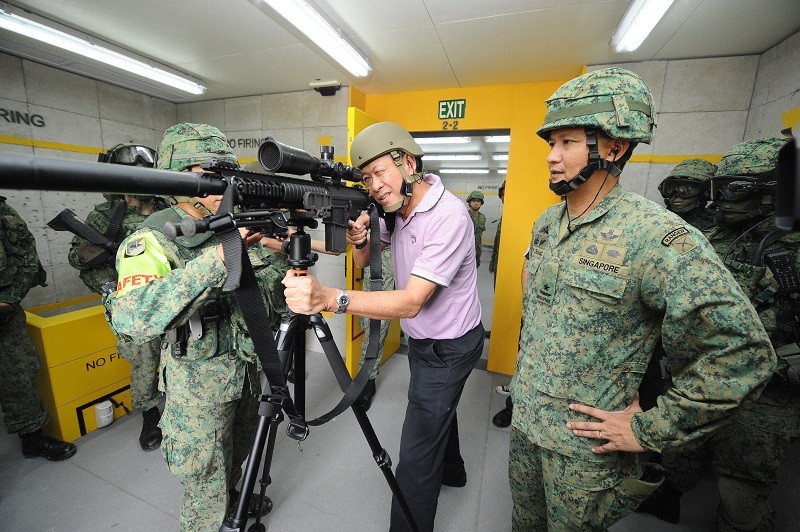
This means that, for the first time, troops can bring in sniper and platform fires, such as the Terrex Remote Control Weapon System and Matador, to support them in their urban operations training.
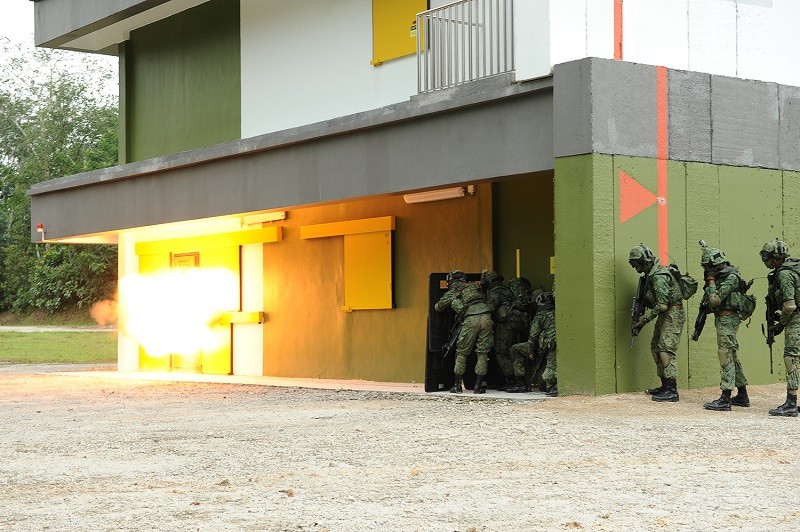
Other advantages of the training facility include firing at external buildings from a close or far firebase, firing from one building window to another, being able to engage in close-quarters battle and using explosives as methods of entry.
Brigadier-General (BG) Chiang Hock Woon, Commander 9th Division and Chief Infantry Officer explained: "We envisage that the modern battlefield is going to be fought in a heavily dense urbanised area, so the whole SAF and specifically, the Army, is transforming into an urban capable force."
"So MULFAC comes in as a very useful facility to train our soldiers realistically for operations which they will be put into."
To add realism to the training, targets which switch between friend and foe are used to simulate realistic scenarios. Soldiers are put through scenarios to hone their ability to discern between enemy targets and civilians.
Comprising five two-storey buildings, two firebases (a close and a far firebase), and an After Action Review facility, MULFAC can house up to 100 soldiers at any one time. Previous live-firing facilities like the Multi-Mission Range Complex (MMRC) can accommodate only a section of soldiers or seven men.
At the launch of MULFAC on 14 Aug, Minister for Defence Dr Ng Eng Hen commented that the facility not only provided realistic training for the soldiers, it also helped to build their confidence in doing live firing in enclosed areas.
"Mounting our Terrex vehicle, coming out of it, blowing up doors and getting access... gives them (soldiers) the realism."
He added that MULFAC allowed troops to take on repetitive training, which would hone their instincts and allow them to apply their rules of engagement before firing.
Before training at MULFAC, soldiers will have gone through training at the MMRC and Murai Urban Training Facility. And because of this facility, soldiers can now undergo live firing training in an urban operations environment by 50% to 60% more than what they have been put through.
This increase in frequency of training is highly beneficial to the soldiers, as there are plenty of blind angles when it comes to urban operations.
Corporal Dinesh S/O Rajendran, a Trooper from Headquarters Guards who has trained at MULFAC about four times since it began operations in October last year, said: "In urban operations, you don t know from which angle the enemy can fire at you."
As live rounds are being used, soldiers' safety is of utmost concern. The walls of the buildings are constructed with ballistic absorbing concrete (BAC), which absorbs all fired rounds to prevent backsplash. The BAC blocks are also checked every two weeks and replaced if needed.
With more than 30 video cameras in the five buildings, 2D, 3D and video playback of the battle situation is provided for both commanders and troops to enhance battlefield coordination and communication.
Said BG Chiang: "For urban live firing, close coordination and precise shooting are critical components for a successful mission. This allows troops and commanders to practise command and control to minute details, so that missions can be conducted successfully and safely."
Also in the works for MULFAC is a Hand Grenade House (HGH) where troops will be able to throw live grenades into a room before storming it. This is targeted to be ready by December.
The first of its kind in the region, the HGH will allow soldiers to experience the effects, like over-pressure, of a grenade being thrown into an enclosed environment. They will be able to do this more often - up to three times during their active service, and one or two times as Operationally Ready National Servicemen, as opposed to just doing it once during their Basic Military Training.

ALSO READ IN TECHNOLOGY
Locked & Loaded: SAF Shooting Contingent weapons
26 Nov 2025
AI joins the fight in national cyber defence exercise
12 Nov 2025
AI and closer collaboration among agencies and industry are taking centre stage in this year’s Critical Infrastructure Defence Exercise (CIDeX).
They built this city
01 Oct 2025
Turning vision to reality: the team behind SAFTI City clinches the Defence Technology Prize 2025 Team (Engineering) Award!