
OPS & TRAINING
MORE THAN SUPPLY AND TRANSPORT - 40 YEARS OF DEFENCE LOGISTICS
29 Dec 2006
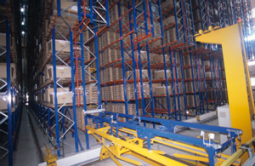
In 1966, the Logistics division was set up in the then-Ministry of Interior and Defence. PIONEER looks at just some of the ways in which logistics in MINDEF has grown in the last 40 years into a progressive system of programmes and capabilities.
There was a time when the SAF frequently ran short of basic necessities while trying to build its Air Force, Army and Navy in a short time.
But, according to an old maxim, amateurs worry about tactics but professionals worry about logistics.
Seldom missed until something breaks down or supplies dwindle, logistics forms a crucial, though unglamorous, part of defence.
Things have certainly improved since those early days, for logistics in MINDEF has matured from its humble beginnings at Pearl's Hill four decades ago.
It has expanded into a sophisticated web of capabilities and initiatives that sustains the SAF's daily and operational needs.
This large and advanced network embraces the logistical support honed in the three Services, coordinated by the Joint Logistics Department.
It also includes the efforts of MINDEF's partners in defence, such as the Defence Science & Technology Agency (DSTA) and DSO National Laboratories.
Harnessing the latest technology to update its facilities, equipment and services, MINDEF's logistics community has made great strides in developing its supply-chain management solutions; maintenance, repair and overhaul (MRO) resources; and defence engineering.
Customer ease and satisfaction
Tedious, labour-heavy supply-chain management in the SAF's early years have yielded to new policies, procedures and organisational shifts.
Colonial-era storage bases have been replaced by automated warehouses with high-tech management systems, such as the Army Logistics Base (ALB) and that in Changi Naval Base.
These new warehouses are equipped with the Automated Storage and Retrieval System that takes much less manpower and time to fetch and track goods.
Operating the ALB is Singapore Technologies Logistics/Toll Asia, a leading local player in logistics solutions.
Cookhouses, too, are no longer operated by SAF units. These days, Singapore Food Industries and take care of everything.
Not only has the outsourcing of warehousing and cookhouse functions seen a rise in service quality, it has also rechannelled precious resources towards building up core capabilities.
Since 2001, the is one project that has revolutionised the cumbersome kit exchange system of yesteryear.
Using the annual shopping credits, full-time staff and Operationally-Ready National Servicemen (NSmen) can obtain standard personnel equipment easily and conveniently.
They can either buy their items from walk-in retail stores in over 20 camps across the island, or order them online via the NS Portal at www.ns.sg.
Online orders can be collected in person from a retail outlet, or even home-delivered for a fee of $5. Home delivery is free for purchases worth $80 or more.
In 2006, the 's online application was upgraded with a more user-friendly interface.
Name tags can now be ordered and customed online, a feature that was previously unavailable.
For a small fee, users can also arrange for their name tags to be sewn onto their just-ordered No. 4 or combat-dress uniforms prior to delivery or collection.
Would anyone have imagined such consumer convenience in the SAF 40 years ago? Probably not.
Technological upkeep
Maintaining the SAF's high-end weapon systems is key to ensuring safe operations and the success of missions.
At Sembawang Air Base, the Senior Technicians of the Air Logistics Squadron (ALS) have been using various programmes and equipment that help them do their jobs more effectively, productively and safely.
One of them, the Tools Barcoding System, was even developed in-house by the squadron's Electrical and Instrumentation Flight.
Employed to keep track of aircraft maintenance tools, it records the particulars of the tools that are loaned out, the personnel who borrow them and the aircraft for which they are used.
Previously, numbered plastic tags stood in for tools that were booked out.
"In the future, we hope to use Radio Frequency Identification (RFID) technology to locate missing tools," said Flight Warrant Officer 1WO Wong Chung Seng.
Another piece of helpful hardware is the , which has been used in ALS for the past four years.
This compact, rugged laptop provides access to a wealth of knowledge on the AH-64D Apache helicopters.
Included in its database are test and repair procedures, parts information and system configurations.
Essentially, each of these laptops is equivalent to hundreds of traditional printed training manuals.
An all-in-one reference guide, it solves the hassle of consulting different manuals for a single task. Installations via CD-ROM keep its database up to date.
But it is not just a well-stocked reference guide; it serves as a comprehensive diagnostic analyser, too.
When plugged into the Apache helicopter, it can download the finest details on the aircraft's condition and how well its components are functioning.
"This has certainly given us the quantum leap in our operational readiness and allows flexibility in deployment," said ALS's Chief Warrant Officer MWO Kwek Hiok Chew.
A marriage of engineers and users
Successful defence engineering, according to Professor Lui Pao Chuen, begins with cooperation between engineers and users. He should know best.
Twenty years before he became MINDEF's Chief Defence Scientist, he joined the Logistics Division of the then-Ministry of Interior and Defence in 1966.
He went on to distinguish himself in systems engineering and masterminded the development of new, increasingly high-tech capabilities for the SAF.
In the 1970s, however, his first project - the V200 Armour Fighting Vehicle (AFV) - found few fans among users.
While it was a technological success, it had limited mobility. "Its wheels would get stuck in mud," recalled Prof Lui.
Such teething problems in the SAF's early years were due to "insufficient integration at the conceptualisation stage of the project" between engineers and operational staff.
"We came up with our own way of thinking," said Prof Lui. "That is, we must start from the project's conception stage, progress from there and stay with it until it is finally retired."
"During its lifetime, we can rework it to create new capabilities and different roles."
This process of conception to retirement was subsequently codified in 1976 as the MINDEF Life Cycle Management methodology.
Prof Lui was also involved in introducing the fighter jets into the Air Force, as well as acquiring the .
In October 2006, the Army commissioned its new BIONIX II Infantry Fighting Vehicle, boasting firepower that far exceeds its ancestors.
Four decades ago, Prof Lui couldn't imagine that the SAF would have its current capabilities today.
"But then, we had a vision," said Prof Lui. "We have been very fortunate to have very good people working in defence, operations and technology, plus full support from the government."
"We must continue to dream of the great things that can happen and, of course, deliver the things that will delight users, and make a difference to Singapore."
Looking ahead
To support the SAF's third-generation transformation, Head of Joint Logistics BG Philip Lim feels that MINDEF's logistics forces needs to "work as a close-knit community within the defence eco-systems".
He said: "We have to respond swiftly and flexibly to uncertain logistical demands by establishing a flexible and adaptable organisation with superior information and situational awareness."
An example he cited is the end-to-end Enterprise System, a resource planning IT solution which was first implemented in the Navy in April 2005 before being progressively adopted for the entire SAF.
However, this involves more than just "automating processes and going paperless", but also "better resource management".
"With better resource awareness and our technological edge, we can better sense emerging demands and tailor our responses accordingly to ensure effective use of our defence resources," he said




ALSO READ IN OPS & TRAINING
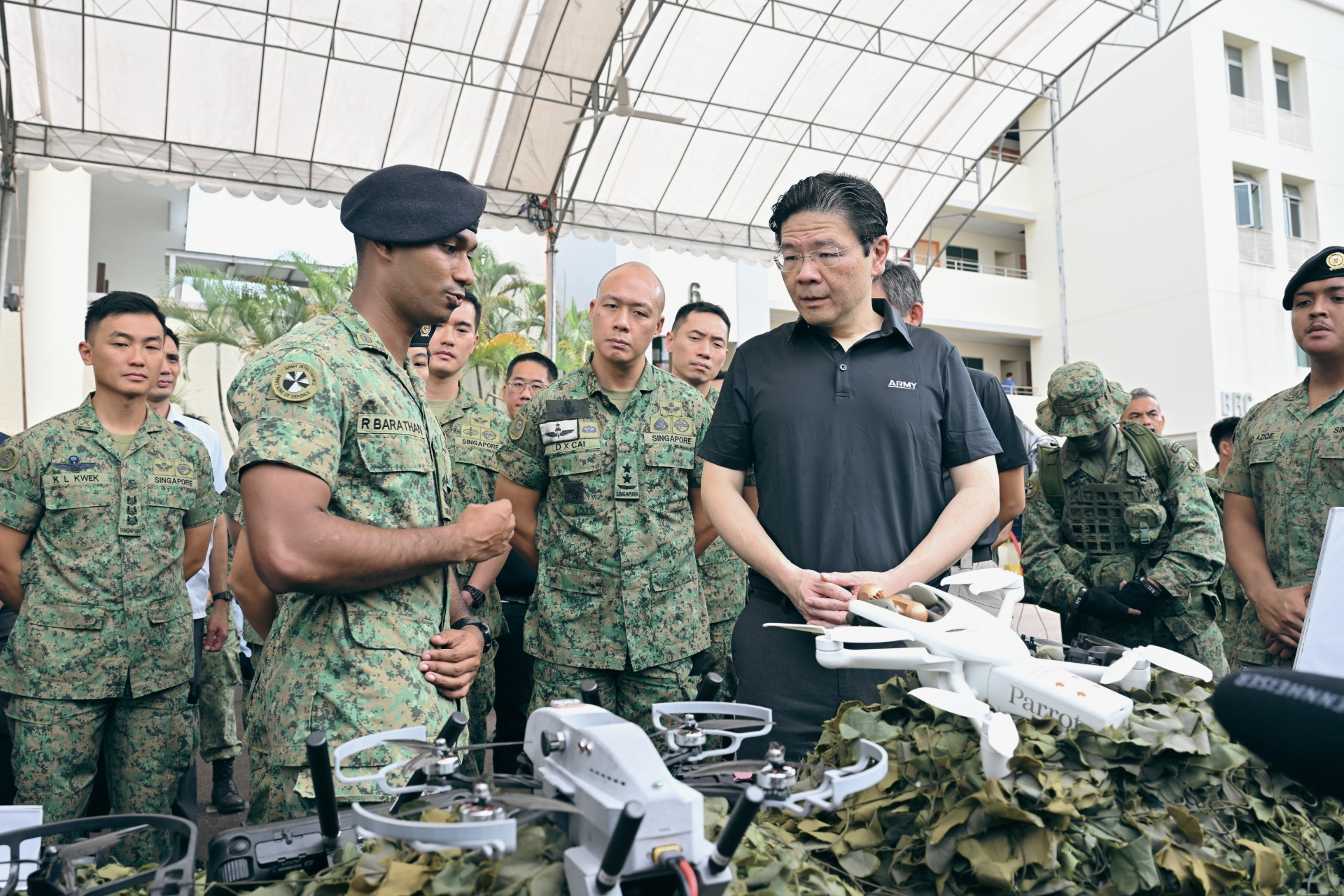
Prime Minister Lawrence Wong observes SAF’s sense-strike integrated capabilities
09 Apr 2026
He witnessed the SAF’s ongoing efforts in leveraging advanced robotics and cross-Service integration to secure Singapore’s interests in an increasingly volatile world.
SAF detonates 250kg WWII bomb uncovered at Tanah Merah Coast Road
02 Apr 2026
On 2 Apr, the SAF’s Explosive Ordnance Disposal (EOD) team successfully disposed of an unexploded war relic found at Tanah Merah Coast Road.
Flying into the unknown: Inside RSAF’s mission to bring S’poreans home from Middle East
28 Mar 2026
Despite the risks and complex challenges of flying in a conflict zone, the men and women of the RSAF pulled off a successful mission through careful planning and hard work.