
OPS & TRAINING
MEDIC!
01 Jan 2019
Check out some of the equipment that a combat medic carries in the field, in the last of a three-part series on everyday military gear.
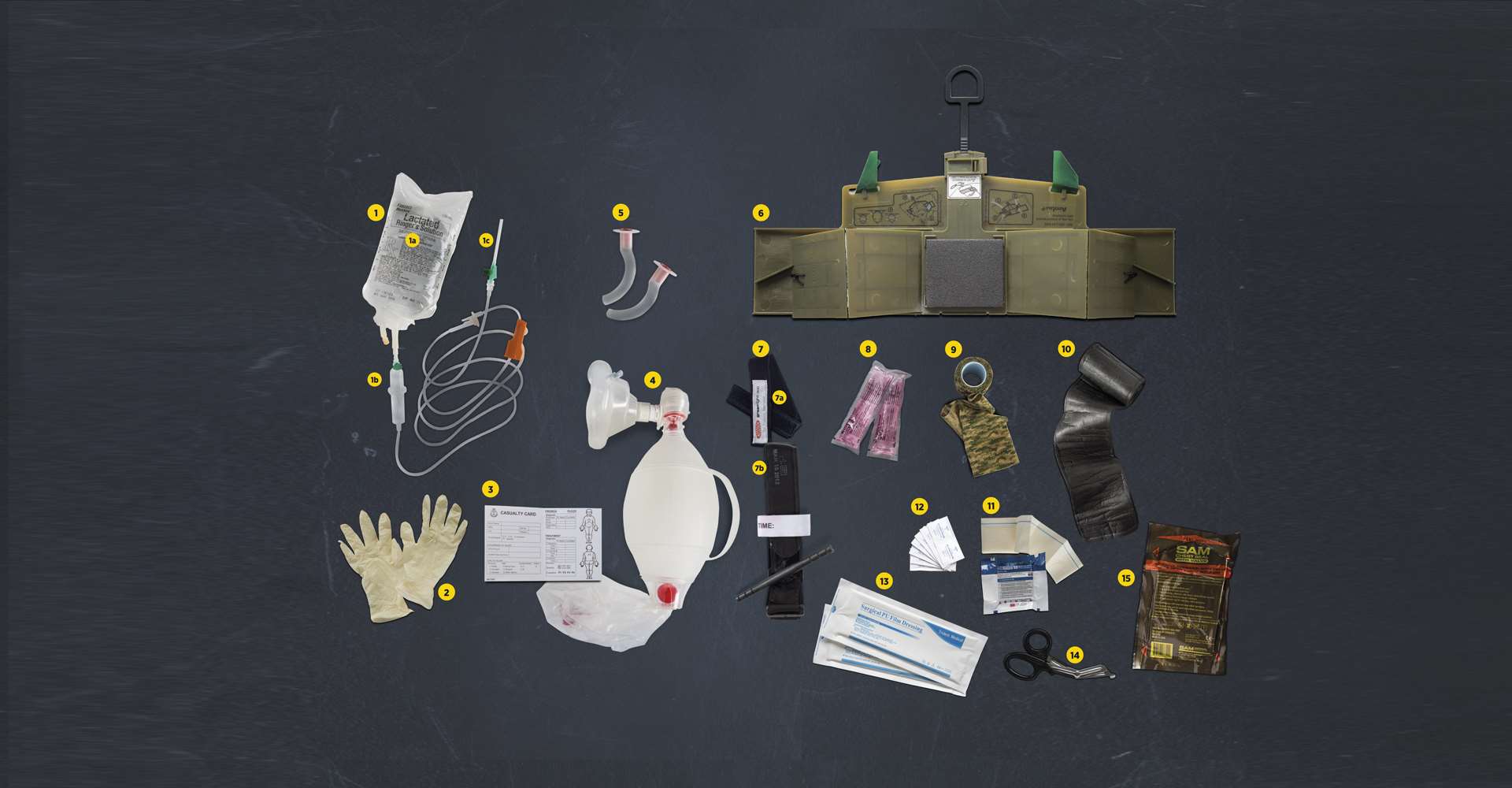
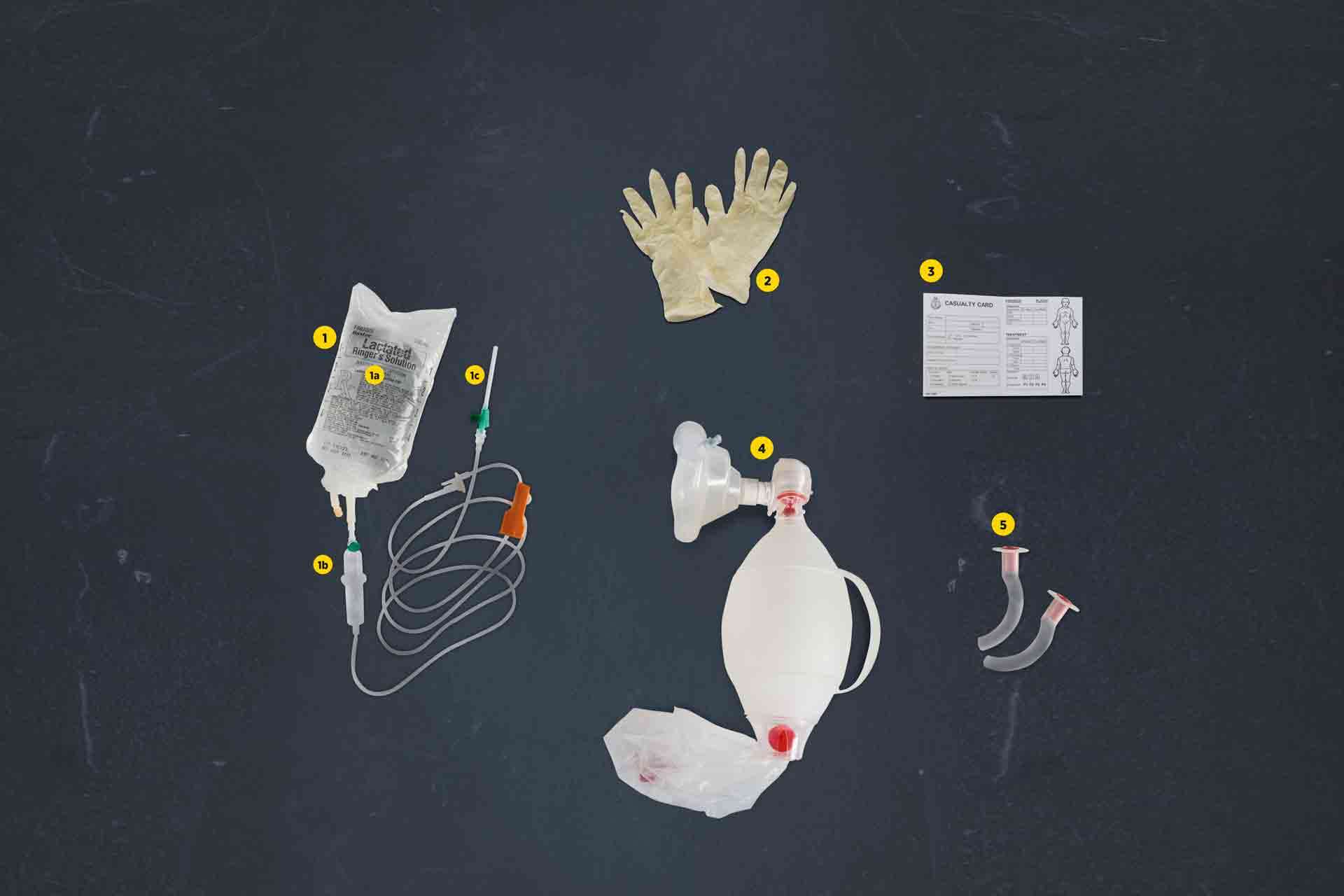
1 Intravenous Drip Set
Used to administer saline to patients who are losing large amounts of fluid such as during massive bleeding. The set comprises (a) sterile saline water bags, (b) an intravenous catheter used to adjust fluid flow and (c) an injection set for introducing a line into the body.
2 Latex Gloves
Each medic carries multiple pairs of disposable gloves to protect himself and the casualty from contamination.
3 Casualty Cards
Designed to fit into the breast pockets of the No. 4 uniform, these are a vital record of any injuries sustained and treatments received by a soldier.
4 Hand-Operated Resuscitator
Used to provide artificial ventilation to casualties when their breath rate is abnormal. In hyperventilation cases, it can also be used to regulate breathing.
5 Oral Airways
Prevent unconscious patients from suffocating. Inserted into the oral cavity, this device holds the tongue away from the back of the throat. It is hollow to aid airflow.

6 Cervical Supports
Usually applied when spinal injuries are suspected, these prevent movement of the head and neck to maintain neutral alignment.
7 Tourniquets
Medics carry a pair of tourniquets: (a) a smaller, elastic tourniquet to enhance the visibility of veins before drawing blood or administering fluid or medication; and (b) a larger tourniquet to arrest severe haemorrhage. This larger tourniquet has a label to indicate the time that it was administered.
8 Cleansing Solution
Each pack holds 25ml of Chlorhexidine Gluconate solution. This disinfectant and antiseptic solution can be used to clean wounds and also the medic’s hands before he tends to an injured soldier.
9 Camouflage Bandage
An elastic bandage used to bandage wounds, usually used as part of the secondary dressing.
10 Splint
A flexible and mouldable splint that can be shaped into a strong support to immobilise broken or injured limbs and prevent further injury.
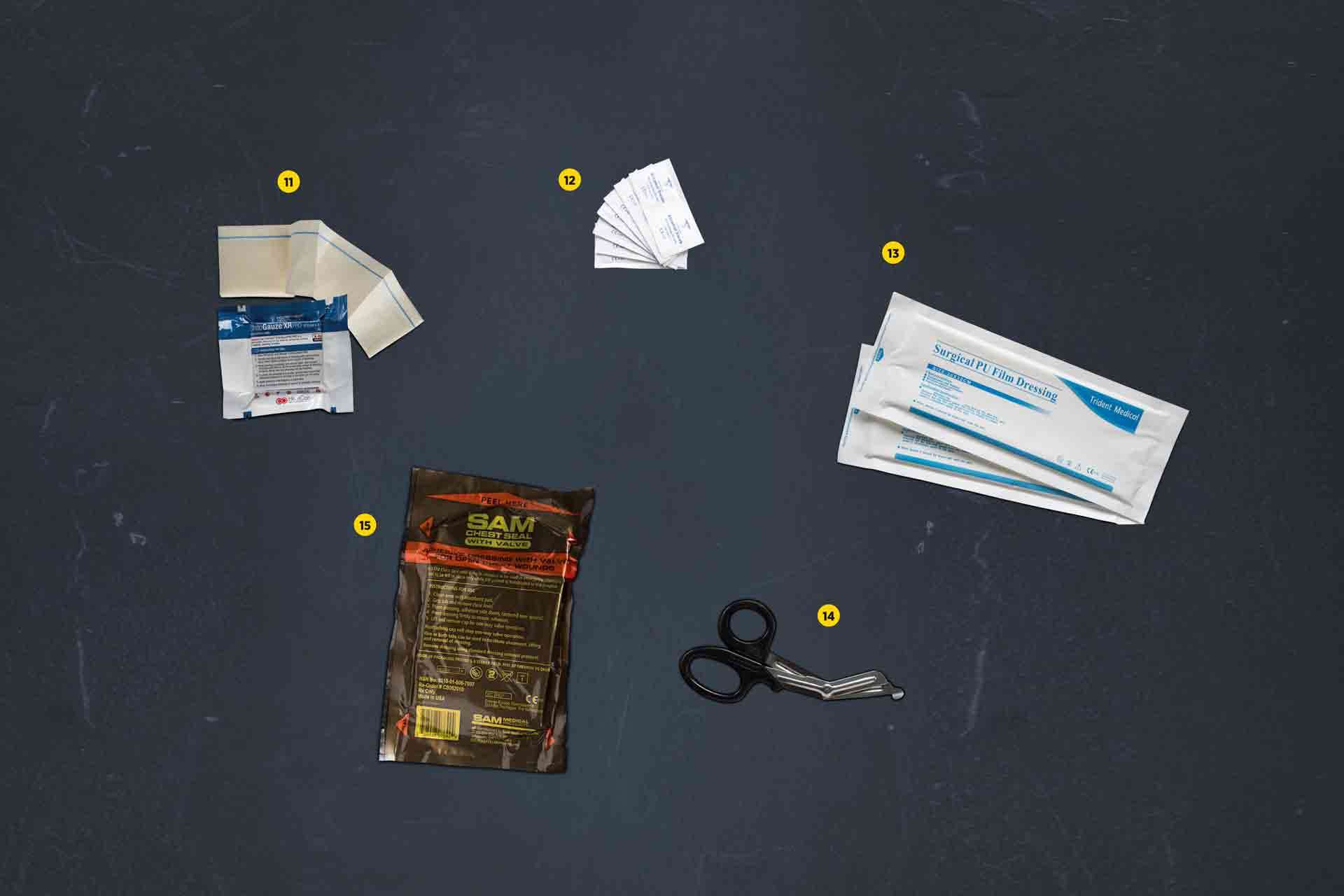
11 Hemostatic Bandage
Used to staunch severe bleeding, this bandage is coated with a compound that encourages blood coagulation. Medics are trained to stuff as much of this x-ray detectable bandage into a wound as necessary to stop the bleeding.
12 Alcohol Swabs
These alcohol-soaked cotton pads are used to disinfect the skin before injections.
13 Burns Dressing
Used to cover burn-related injuries, these dressing sheets are breathable and conformable to wounds. Each pack holds a square sheet measuring about 30cm.
14 Scissors
An essential part of any medic's kit bag, this pair of angled scissors cuts through bandages and uniforms. It is blunt-tipped to prevent injury from use.
15 Chest Seal Bandage
For open chest wounds (usually inflicted by gunfire), this ultra-sticky bandage quickly stops blood loss and eases a collapsed lung. It also has a one-way valve to prevent internal obstruction.

ALSO READ IN OPS & TRAINING
Exercise Wallaby 2025: To see better, shoot faster
31 Oct 2025
The SAF focuses on complex strike missions and multi-domain integration in Exercise Wallaby 2025, the 35th edition of its largest unilateral overseas exercise.
Ex Wallaby 25 – Greater Integration and Complexity
25 Oct 2025
The 35th edition of the SAF’s largest unilateral overseas exercise is an opportunity for expanded scale and deeper integration towards an effective, networked fighting force.

Ex Forging Sabre ramps up use of unmanned assets in integrated strike operations
12 Sep 2025
In this 10th edition of Exercise Forging Sabre, the SAF sharpened its cutting edge for the dynamic modern battlefield, with expanded integration between manned and unmanned platforms.