
DIPLOMACY
ADMM WORKING ON MEASURES TO DE-ESCALATE SOUTH CHINA SEA ISSUES
18 Feb 2018
The operationalisation of hotlines to respond to maritime emergencies, the launch of a Direct Communications Infrastructure among ASEAN establishments, and an agreement to expand the Code for Unplanned Encounters to all ASEAN Defence Ministers' Meeting (ADMM)-Plus countries this November.
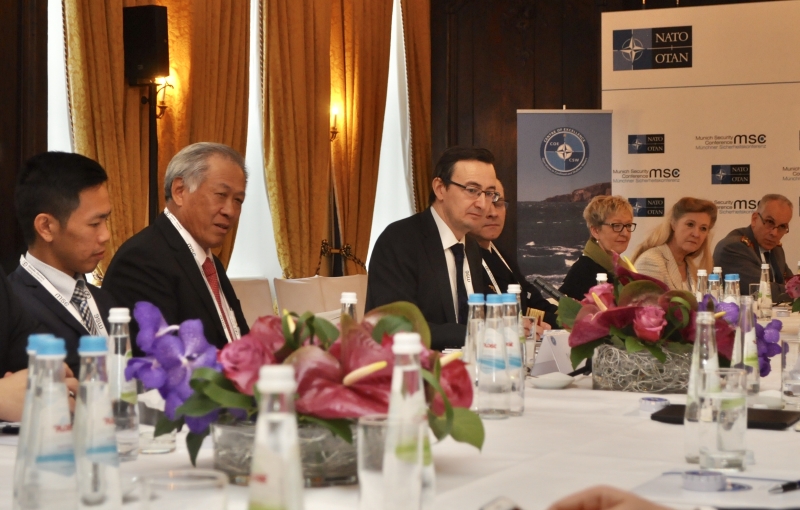
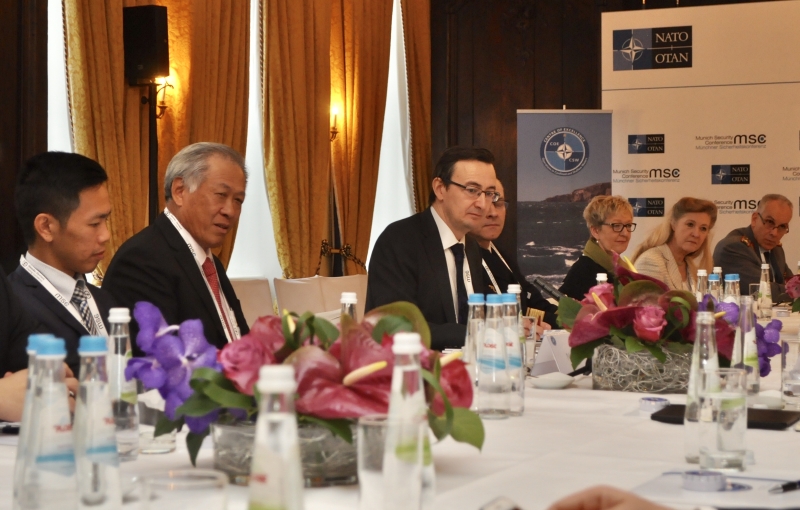
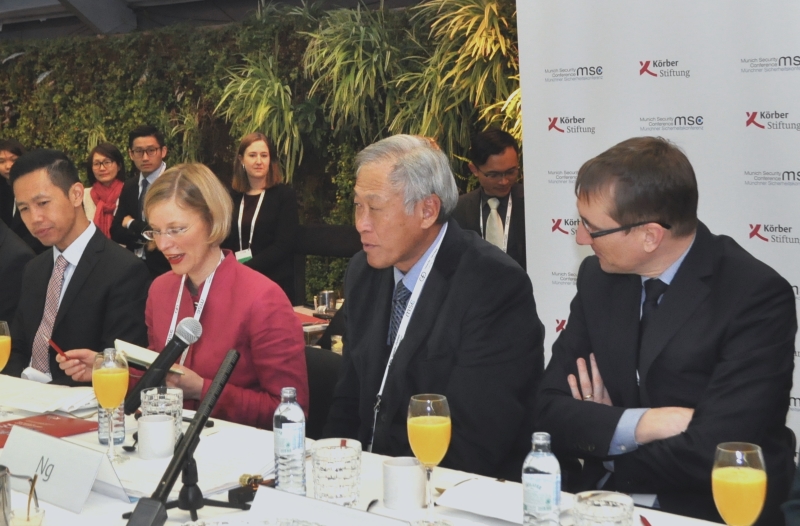
Minister for Defence Dr Ng Eng Hen cited these examples of how the ADMM has "worked hard to produce consensus on practical measures that prevent mishaps and miscalculations (and) de-escalate issues" in the South China Sea.
He was speaking on the topic "Bridging Troubled Waters - The South China Sea Dispute" at the 54th Munich Security Conference (MSC), an annual high-level conference attended by heads of government, ministers, military leaders and security experts, on 17 Feb.
Noting that ASEAN member states have taken a pragmatic approach to the South China Sea issues, he said that both ASEAN and China have "affirmed the hope" to complete a Code of Conduct to handle disputes in the regional hotspot.
Dr Ng also highlighted that Singapore, as ASEAN Chair this year, would work with the other ASEAN countries to develop a set of guidelines for air encounters between regional military aircraft.
"We seek to enhance practical cooperation and build confidence through the conduct of multilateral exercises, including the ASEAN-China Maritime Exercise this year," he added.
This year's MSC was held from 16 to 18 Feb in Munich, Germany. Topics included the defence cooperation in the European Union and the North Atlantic Treaty Organisation, security around the borders of the Sahel region of Africa, and other areas such as nuclear security and Jihadism.
On the sidelines of the conference, Dr Ng addressed the 10th Munich Young Leaders Round Table on "Peace and Security in the Asia Pacific" on 18 Feb.
Citing examples such as Brexit, he noted the recent backlash against globalisation 1.0, which was mainly put in place by the US and other western countries after World War II.
While globalisation remains important, "there has to be a globalisation 2.0, with slightly different set of rules, adjustments and balance in positional powers," said Dr Ng.
He also stressed that while China is now the leading trade partner for ASEAN and Asia, the "accommodation of China and US is crucial". Speaking to the 20 young leaders from 15 countries, he asked them about their views on prospects for progress and democracy in the Middle East, and the hopes and aspirations of the people there.
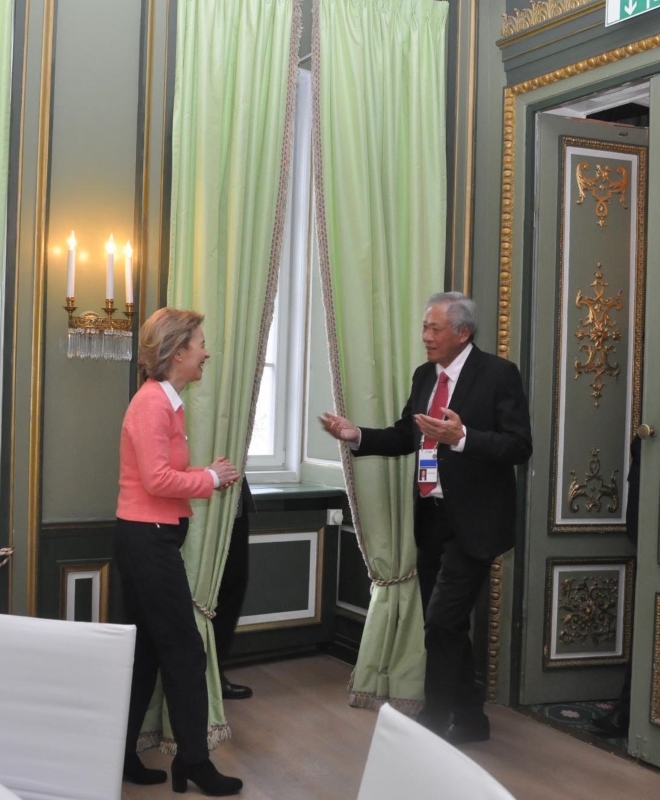
During his visit to Munich, Dr Ng met German Minister of Defence Dr Ursula von der Leyen and a US congressional delegation. He also reaffirmed the excellent ties between Singapore and the US during a conference call with US Secretary of Defence, James Mattis.

ALSO READ IN DIPLOMACY
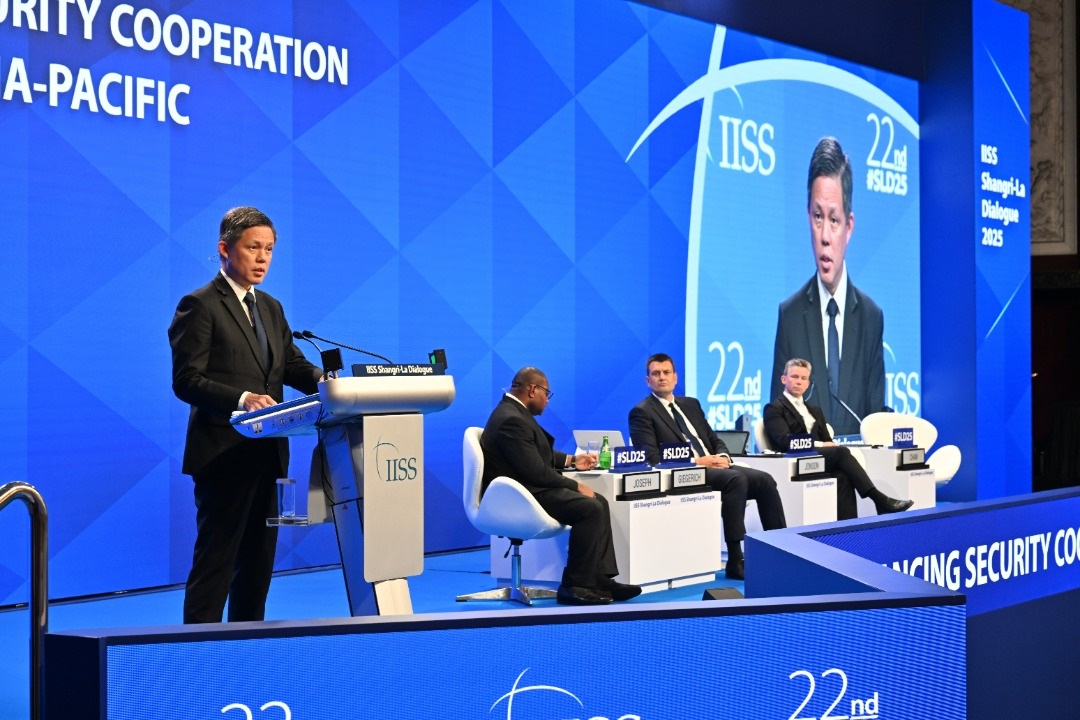
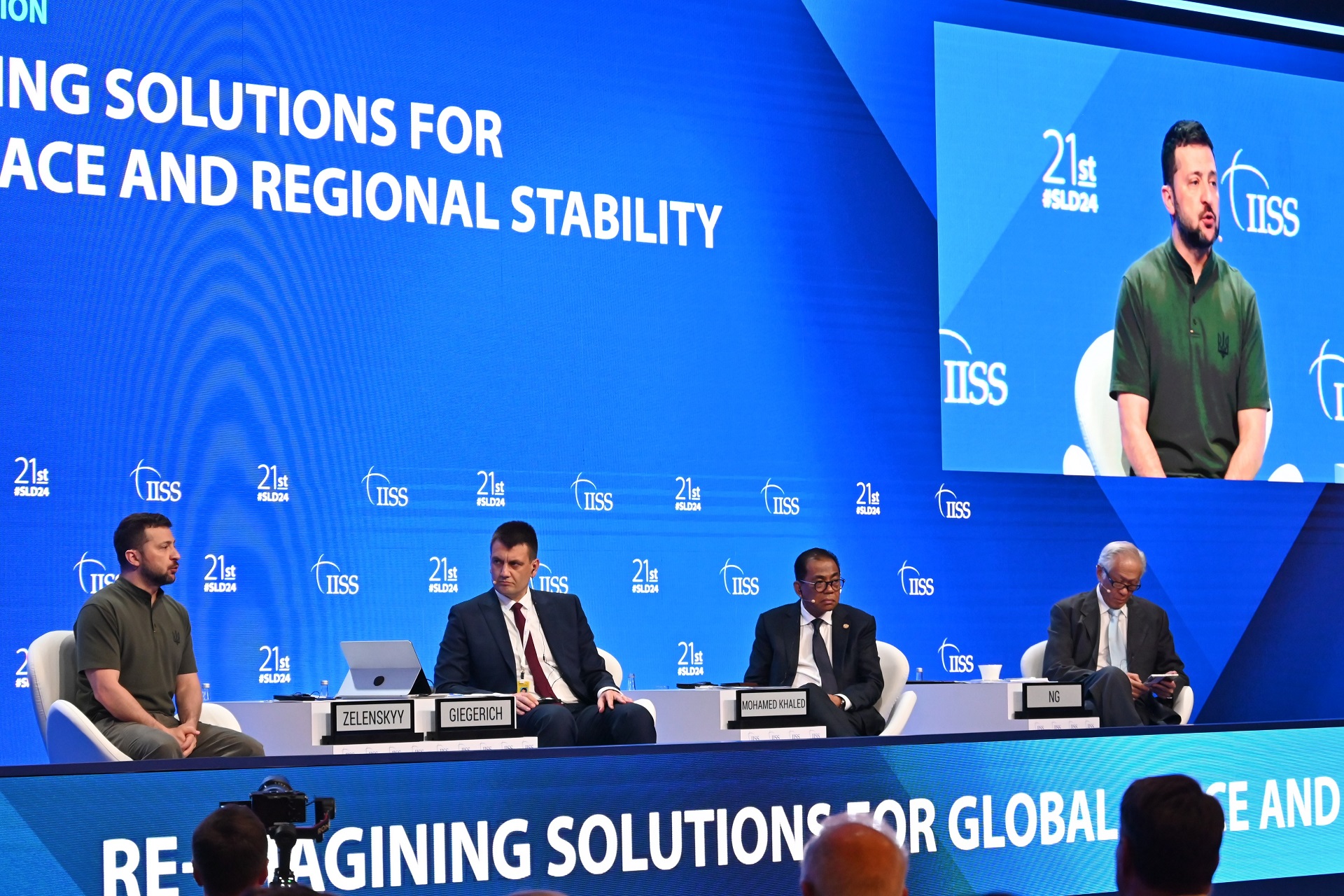
A call for peace at Shangri La Dialogue
02 Jun 2024
A repeated call for peace, especially in Asia. This was Minister for Defence Dr Ng Eng Hen's central message at the 21st Shangri La Dialogue (SLD), held from 31 May to 2 Jun.
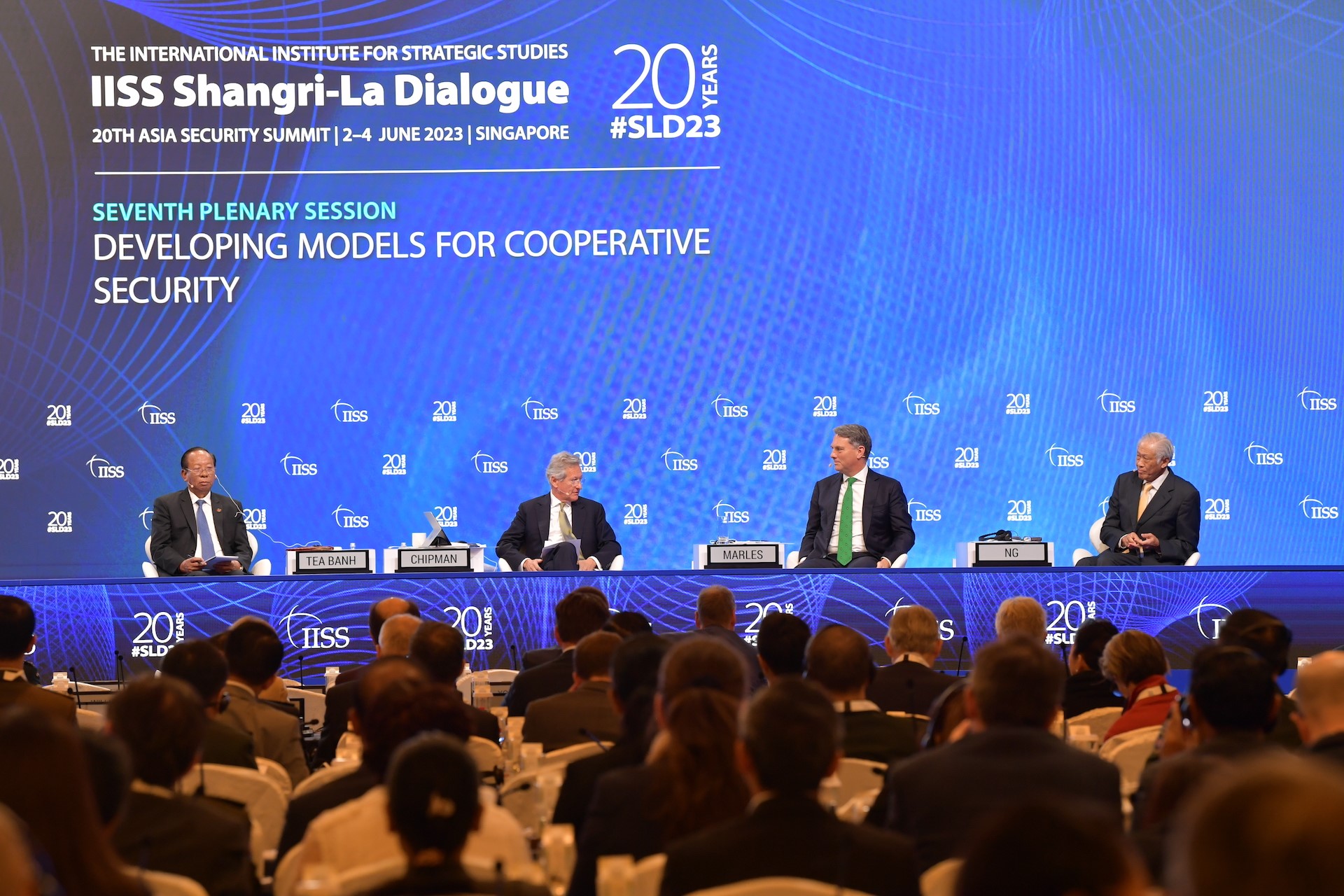
Shangri-La Dialogue sees frank discussion of security issues
04 Jun 2023
The 20th Shangri-La Dialogue, held from 2 to 4 Jun, saw ministers from around the world meet in Singapore to discuss key defence and security issues.
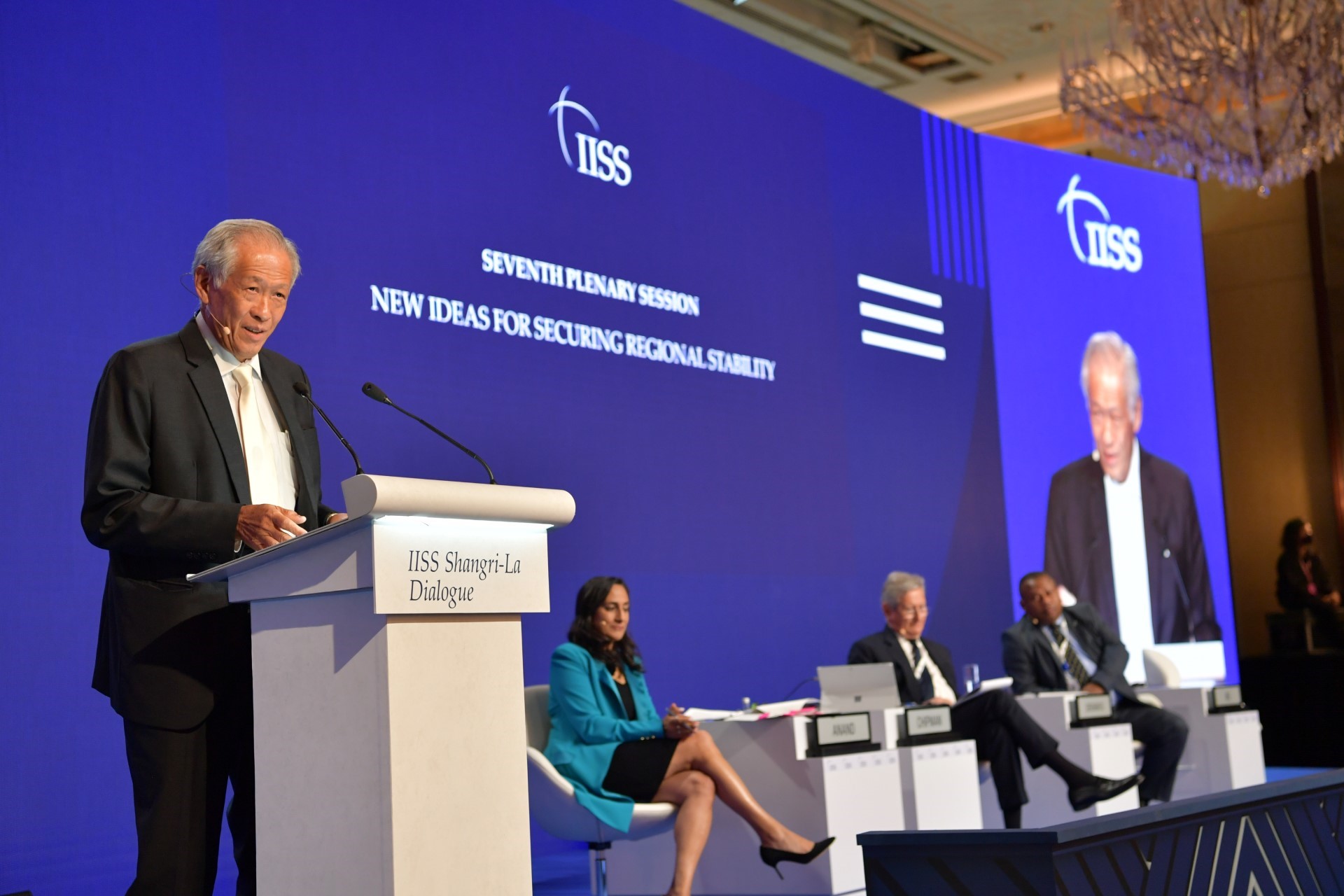
SLD remains valuable platform for crucial discussions: Dr Ng
12 Jun 2022
Minister for Defence Dr Ng Eng Hen spoke on the US-China relationship, the importance of a rules-based order and the role of ASEAN as a regional security platform at the 19th Shangri-La Dialogue (SLD).